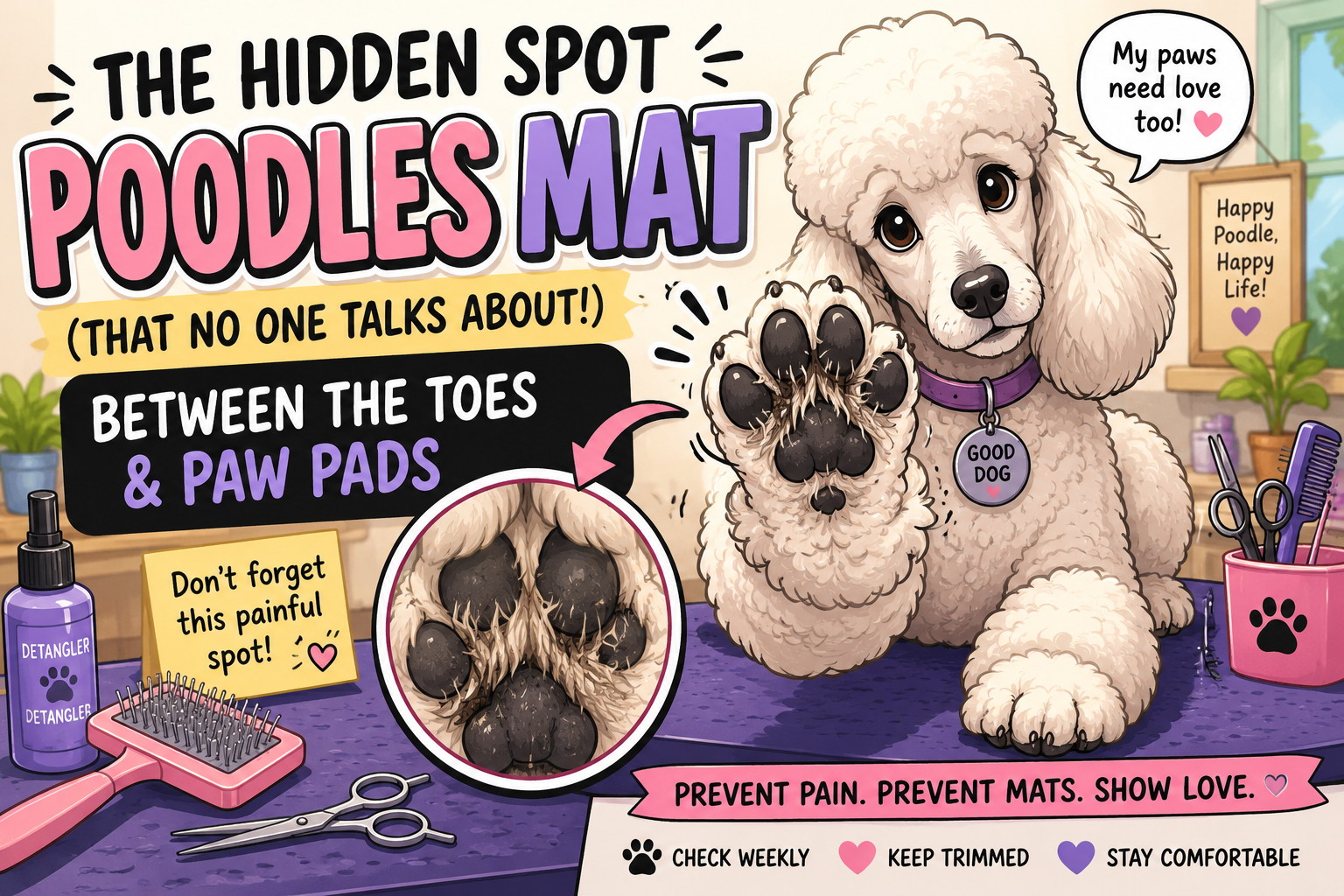
If you own a poodle, you already know how quickly their coat can mat if you fall behind on grooming. But there’s one spot that almost no one talks about…
And unfortunately, this is one of the most painful places for matting to happen.
Why This Area Gets Missed
When I first started grooming my own poodle, I did what most people do—I watched tons of videos, read blog posts, and tried to learn everything I could.
But here’s the thing…
Not one person mentioned between the toe pads.
Not a single tutorial warned me that hair grows thick between the toes and can pack down tightly inside the paw pads.
By the time I realized it?
My dog’s paws were completely packed with mats.
Hard. Tight. Painful.
And removing them was not a quick fix—it was uncomfortable for my dog and honestly upsetting for me too.
That’s why I’m writing this. Because if you don’t know to check there… you won’t.
Why Paw Matting Is a Big Deal
Matting in the paws isn’t just a cosmetic issue—it directly affects your dog’s comfort and health.
Here’s what happens when that hair is left unchecked:
- Mats tighten every time your dog walks
- Debris, moisture, and bacteria get trapped
- It can cause pain when walking
- Dogs may start licking or chewing their feet
- In severe cases, it can lead to infections
Think about walking around with a pebble stuck in your shoe all day—that’s what it can feel like for them.
Signs Your Dog Has Matting in Their Paws
Check for these warning signs:
- Excessive licking or chewing at feet
- A “crunchy” or dense feeling in the paw pads
- Visible hair sticking out between toes
- Reluctance to walk or sensitivity when touched
If you notice any of these, it’s time to take a closer look.
How to Prevent Matting in the Paws
The good news? This is very preventable once you know about it.
1. Regular Paw Checks
Get in the habit of checking your dog’s paws weekly—especially after baths.
2. Keep Hair Trimmed
You want the hair flush with the paw pads, not sticking out or packing in.
3. Brush the Feet (Yes, Really)
Use a small slicker brush to gently fluff out the hair between the toes before trimming.
Tools That Make This Easier (Affiliate Picks)
These are beginner-friendly tools that make paw maintenance much safer and easier:
- Dog Paw Trimmer (Quiet Clippers) – Perfect for sensitive areas like paw pads
- Slicker Brush for Small Areas – Helps loosen hidden mats between toes
- Rounded Tip Grooming Scissors – For careful trimming around delicate spots
👉 Pro tip: Always go slow and never force clippers through tight mats—this is how injuries happen.
Don’t Forget Nail Maintenance
Overgrown nails make everything worse. They change how your dog’s foot sits on the ground, which increases pressure and discomfort—especially if there’s already matting in the paw.
If you’re unsure how often to trim, I break it down step-by-step here:
👉 When Should You Cut Your Dog’s Nails? (Full Guide)
When to Call a Groomer
If the paw is tightly packed with mats, please don’t try to dig them out yourself.
This area is extremely sensitive, and it’s very easy to accidentally cut your dog.
A professional groomer can safely remove the matting with the right tools and experience.
Want to Learn Grooming the Right Way?
If you’re feeling overwhelmed trying to figure all this out on your own—I get it. I’ve been there.
That’s exactly why I created my ebook:
👉 Your At-Home Dog Grooming Guide
Inside, I walk you through:
- The most commonly missed grooming areas (like this one)
- Step-by-step routines that actually work for busy dog owners
- How to avoid painful mistakes that most beginners make
Final Thoughts
This is one of those things that seems small… until it’s not.
Paw matting is:
- Easy to miss
- Painful for your dog
- Completely preventable
Now that you know, you can stay ahead of it.
And honestly? This is the kind of detail that separates “just grooming” from truly caring for your dog well.
Affiliate Disclosure
This post may contain affiliate links. This means I may earn a small commission if you purchase through my links—at no extra cost to you. I only recommend products I trust and would use on my own dog.




Leave a Reply