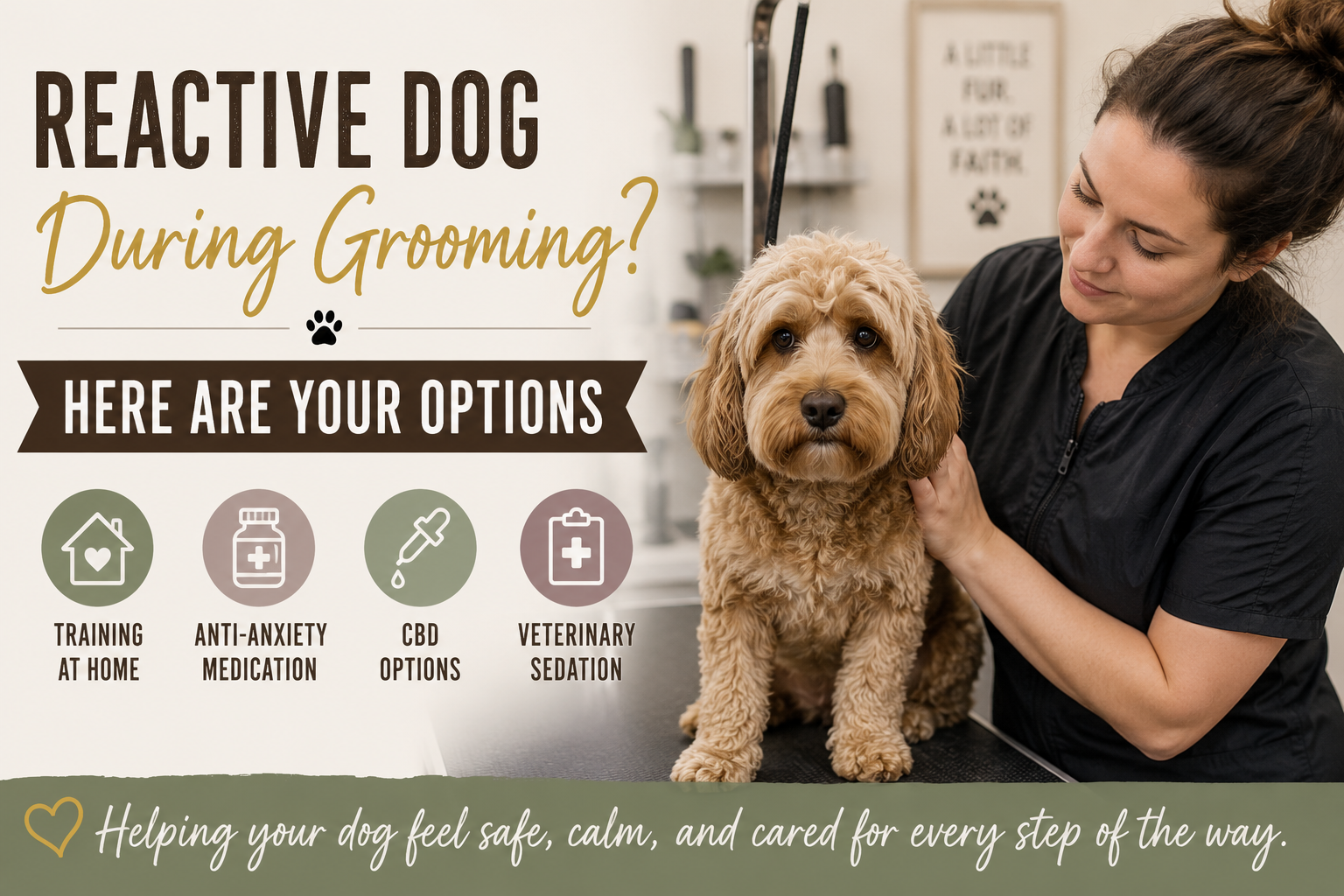
If your dog growls, snaps, shakes, hides, or completely panics during grooming, you’re not alone.
Many dogs struggle with grooming, and it doesn’t mean they’re “bad dogs.” Some are fearful because of a past experience. Others were never introduced to grooming as puppies. Some develop anxiety as they age, while others have medical conditions that make grooming uncomfortable or even painful.
The good news is that you have options. Finding the right solution depends on your dog’s individual needs, and the best results usually come when you, your groomer, and your veterinarian work together.
Start by Talking to Your Groomer
One of the most important things you can do is be honest with your groomer.
Please don’t be embarrassed if your dog struggles. We’d much rather know ahead of time than be surprised once your dog is on the table.
Tell your groomer if your dog:
- Has bitten or attempted to bite.
- Is fearful of nail trims.
- Panics during drying.
- Has anxiety around strangers.
- Has arthritis or other painful medical conditions.
- Is taking any medications or supplements.
The more information your groomer has, the better they can create a plan that’s safe and less stressful for everyone.
Practice Grooming at Home
The best grooming appointment starts long before your dog ever walks into the salon.
Spend just a few minutes several times a week helping your dog become comfortable with being handled.
Practice:
- Holding each paw.
- Looking inside the ears.
- Touching around the face.
- Brushing for a minute or two.
- Gently lifting the tail.
- Rewarding calm behavior with treats and praise.
Keep every session positive and end before your dog becomes overwhelmed.
Remember, you’re building trust—not testing your dog’s patience.
Try the Electric Toothbrush Trick
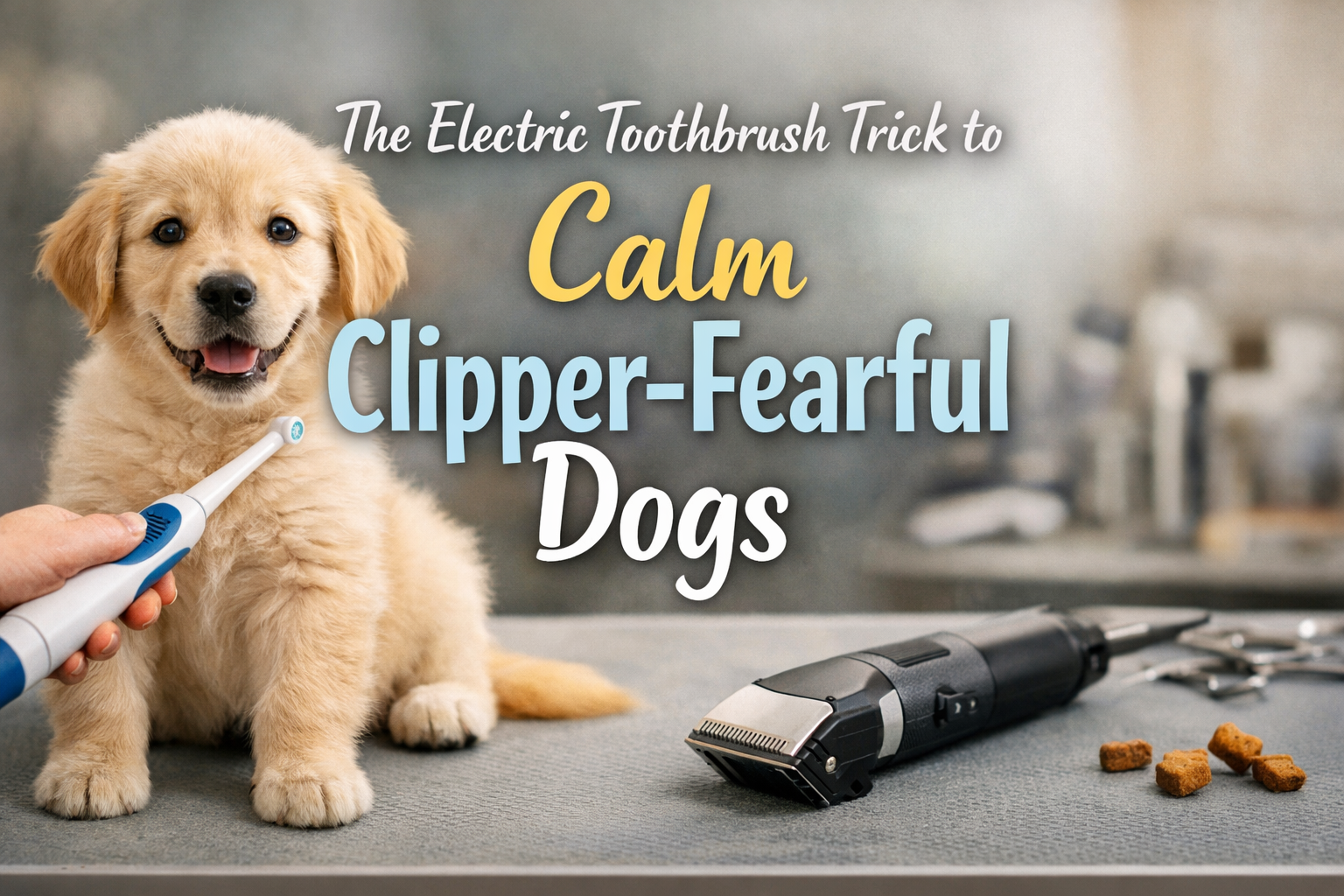
One of my favorite training tools isn’t a grooming tool at all—it’s an inexpensive electric toothbrush.
The vibration is surprisingly similar to what dogs feel when clippers are running over their body. By introducing that vibration slowly and pairing it with treats, many dogs learn that the sensation isn’t scary.
Start by turning the toothbrush on several feet away while rewarding your dog for staying relaxed.
Over several sessions, slowly bring it closer until you can briefly touch the back of the toothbrush to your dog’s shoulder or side. Immediately reward with praise and a high-value treat.
Never force it if your dog becomes frightened. The goal is to create positive associations one small step at a time.
Prescription Anxiety Medication
Sometimes training alone isn’t enough.
Some dogs benefit from veterinarian-prescribed anti-anxiety medication before grooming appointments.
One of my own clients gives her dog a prescription medication before every appointment, and the difference has been incredible. Instead of spending the entire appointment in a state of panic, the dog is much more relaxed and able to tolerate grooming safely.
These medications don’t necessarily sedate your dog. They simply reduce anxiety enough for your dog to cope with the experience.
Only use medication that has been prescribed specifically for your dog, and always follow your veterinarian’s instructions.
What About CBD?
Some owners choose to use CBD products before grooming appointments.
I also have clients who use CBD oil for their dogs. Some owners feel it helps take the edge off their dog’s anxiety, while others don’t notice much of a difference.
Research is still ongoing, and product quality varies widely. Before trying CBD, it’s best to discuss it with your veterinarian, especially if your dog has health conditions or takes other medications.
When Sedation Is the Kindest Option
For some dogs, veterinary sedation is the safest and most humane choice.
Dogs with severe aggression, extreme fear, significant pain, or complicated medical conditions may simply be unable to tolerate grooming safely while awake.
In these cases, grooming performed under veterinary supervision allows necessary care to be completed with the least amount of stress and the lowest risk of injury.
While sedation isn’t appropriate for every dog, there’s absolutely no shame in choosing this option if it’s what your dog needs.
Finding the Right Groomer Matters
Not every grooming salon is the same.
If your dog struggles with grooming, look for a groomer who schedules dogs one-on-one instead of having large drop-off periods where many dogs are checked in at once.
A quieter environment often means:
- Less barking.
- Fewer unfamiliar dogs.
- More one-on-one attention.
- Less waiting in a kennel.
- A calmer overall experience.
Many reactive dogs do significantly better when they’re the only dog being groomed or when the salon intentionally keeps the environment quiet and low stress.
When you’re calling a new groomer, don’t be afraid to ask questions like:
- Do you groom one dog at a time?
- How long will my dog be there?
- Will my dog spend much time in a kennel?
- How do you handle anxious dogs?
- Are you comfortable grooming dogs on veterinarian-prescribed anxiety medication?
Those answers can tell you a lot about whether that salon is the right fit for your dog.
Sometimes the Best Groomer Will Say “No”
This may surprise you, but a good groomer knows their limits.
If a groomer tells you your dog would be safer at a veterinary grooming facility or would benefit from sedation, that isn’t a failure.
It’s an act of compassion.
Forcing a terrified dog through grooming can lead to injuries, damaged trust, and an even worse experience next time.
Sometimes the kindest thing a groomer can do is recommend another option that’s better suited to your dog’s needs.
Stay on a Regular Grooming Schedule
Waiting until your dog is severely matted or overdue for grooming often makes anxiety even worse.
Longer appointments mean more brushing, more clipper time, and more stress.
Regular grooming appointments are usually shorter, more comfortable, and easier for anxious dogs to tolerate.
Every Dog Deserves Compassion
Every reactive dog has a story.
Some need extra practice at home. Some benefit from anxiety medication. Others may do well with CBD, while a few truly need veterinary sedation.
Whatever path you choose, remember that the goal isn’t just getting the haircut finished.
The goal is helping your dog feel safe.
Progress may come slowly, but every positive grooming experience helps build confidence for the future. With patience, teamwork, and the right approach, many reactive dogs learn that grooming doesn’t have to be something they fear.



Leave a Reply