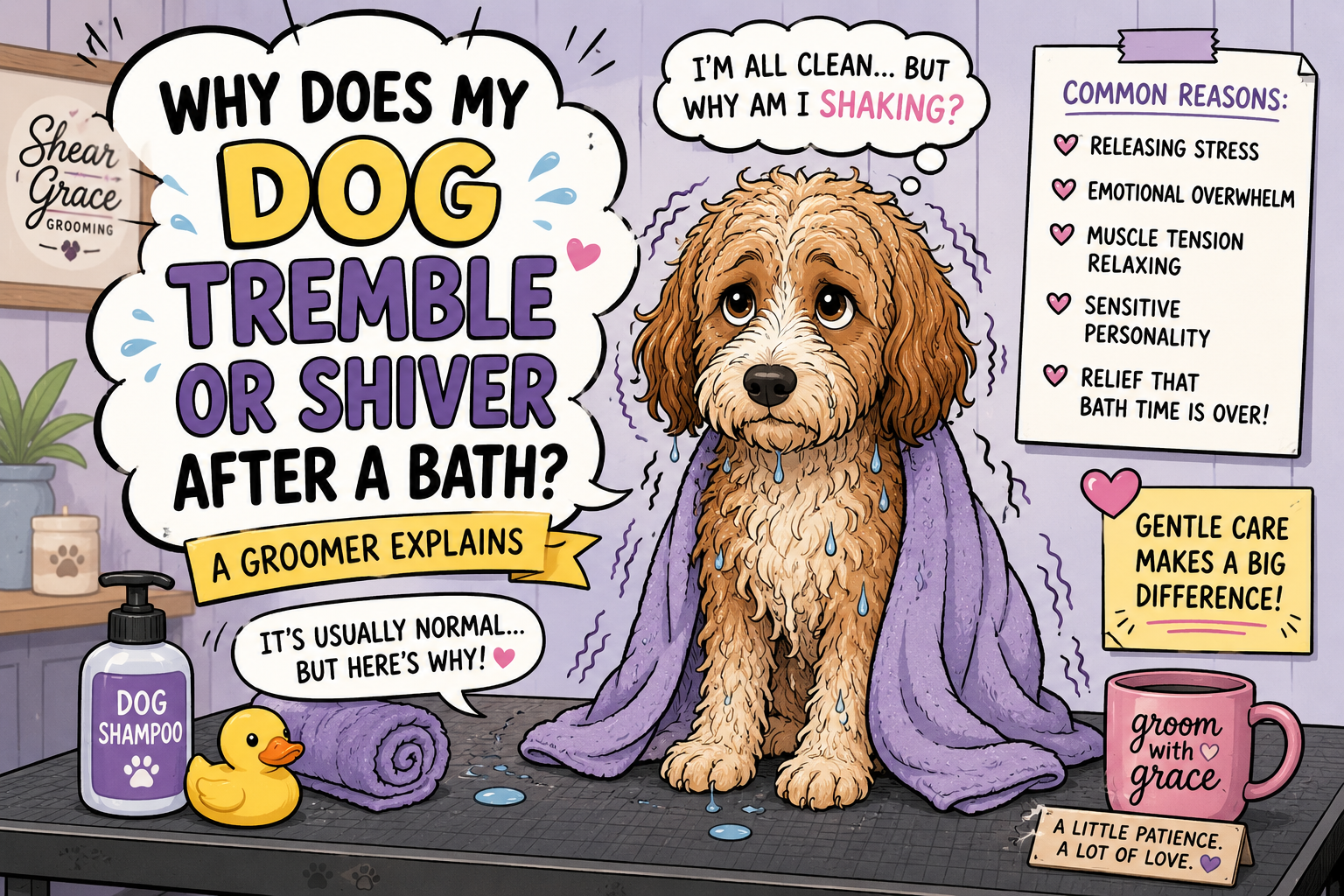
You finish giving your dog a nice warm bath. The water wasn’t cold. The house is comfortable. You dry them off with a towel…
…and then they start trembling.
If you’ve ever wondered why your dog shivers after a bath even though they aren’t cold, you’re not alone. It’s a question many pet owners ask, and in most cases, it’s completely normal.
As a groomer, I’ve seen this happen with dogs of every size and breed. While shivering can sometimes signal a medical problem, post-bath trembling is usually your dog’s way of responding to the experience—not the temperature.
Let’s take a closer look.
First, Trembling Is Different Than Shaking Off Water
Dogs perform two very different kinds of “shaking” after a bath.
The first is the classic whole-body shake that sends water flying everywhere. That’s simply a dog’s incredibly efficient way of drying themselves.
The second is a gentle, repetitive trembling or shivering that can continue for several minutes after the bath is over.
This article is about that second kind.
1. Your Dog May Be Releasing Stress
Even calm dogs can find baths stressful.
Being lifted, handled, soaked with water, shampooed, rinsed, towel dried, and sometimes blow dried is a lot to process.
During stressful situations, the body releases hormones like adrenaline. Once the bath is over, those stress hormones begin to wear off, and some dogs physically tremble as they relax.
Think of it as your dog’s body saying, “Okay… it’s over.”
2. Baths Can Be Emotionally Overwhelming
Dogs experience the world through their senses.
A bath introduces several unusual sensations all at once:
- Running water
- Different smells from shampoo
- Wet fur
- Slippery surfaces
- Loud dryers
- Extended handling
Even if your dog doesn’t struggle during the bath, they may still feel mentally overwhelmed. Trembling afterward can simply be their way of processing everything that just happened.
3. They Were Holding Their Muscles Tense
Many dogs stiffen their muscles during grooming without us realizing it.
After the bath is finished, those muscles finally begin to relax.
Just like people sometimes shake after intense physical or emotional stress, dogs can experience temporary trembling as their body returns to normal.
4. Some Dogs Are Simply More Sensitive
Not every dog reacts the same way.
Dogs that are more likely to tremble after bathing include:
- Small breeds
- Puppies
- Senior dogs
- Naturally anxious dogs
- Rescue dogs with unknown histories
- Dogs that haven’t had many positive grooming experiences
For these dogs, trembling may simply be part of how they respond to something they don’t particularly enjoy.
5. They’re Relieved Bath Time Is Over
Have you ever noticed your dog trembling, then suddenly racing through the house with the “zoomies”?
That’s not unusual.
Many dogs experience a huge sense of relief once the bath is finished. Trembling can be part of that emotional release before they celebrate their freedom by running laps around the living room.
How Can You Help?
If your dog regularly trembles after baths, a few simple changes can make bath time less stressful.
Try these tips:
- Speak calmly throughout the bath.
- Use warm (not hot) water.
- Keep bathing sessions as short as possible.
- Dry your dog gently but thoroughly.
- Offer treats before, during, and after the bath.
- Give plenty of praise and allow your dog to relax afterward.
Over time, many dogs learn that bath time isn’t something to fear.
When Trembling Isn’t Normal
Although mild post-bath trembling is usually harmless, there are times when it deserves closer attention.
Contact your veterinarian if your dog:
- Trembles for an extended period without improving.
- Appears painful or cries out.
- Has difficulty walking or standing.
- Becomes weak or unusually sleepy.
- Vomits or has diarrhea.
- Has trouble breathing.
- Shows pale gums or collapses.
These symptoms are not typical after a routine bath and should be evaluated promptly.
A Groomer’s Perspective
One thing I’ve learned as a groomer is that every dog communicates differently.
Some bark.
Some hide.
Some get the zoomies.
And some simply tremble.
That doesn’t automatically mean they’re terrified or that you’ve done something wrong. For many dogs, it’s just their body’s way of releasing stress after an unusual experience.
The goal isn’t to eliminate every tremble—it’s to make each grooming session calm, gentle, and predictable so your dog gradually becomes more comfortable over time.
Patience goes a long way.
Frequently Asked Questions
Is it normal for my dog to shiver after a warm bath?
Yes. If your dog is otherwise acting normally, mild trembling after a warm bath is often related to stress, excitement, or emotional release rather than being cold.
How long should post-bath trembling last?
Most dogs stop trembling within a few minutes as they relax. If it continues for a long time or your dog seems ill, contact your veterinarian.
Why does my dog shiver even when it’s hot outside?
Temperature isn’t always the cause. Many dogs tremble because of adrenaline, anxiety, or the unusual sensations that come with bathing.
Can professional grooming help?
For many dogs, yes. Gentle handling, consistent routines, and positive experiences can help reduce stress over time. Every dog is different, but many become more comfortable with regular grooming.
Final Thoughts
Seeing your dog tremble after a bath can be concerning, especially when you know they aren’t cold.
The good news is that, in most cases, this kind of shivering is simply a temporary response to stress, excitement, or emotional release. Once your dog has had a chance to relax, the trembling usually fades on its own.
The more positive and predictable bath time becomes, the more confident your dog is likely to feel.
If you’re ever unsure whether your dog’s trembling is normal, don’t hesitate to reach out to your veterinarian. It’s always better to ask than to worry.
After all, grooming should leave your dog feeling clean, comfortable, and cared for—and you feeling confident that they’re doing just fine.
How to Read Your Dog’s Body Language During Grooming (And Prevent Accidents Before They Happen)
Everything You Need to Groom Your Dog at Home (By Coat Type)
The Biggest DIY Dog Grooming Mistakes (That Are Secretly Ruining Your Dog’s Coat)



Leave a Reply