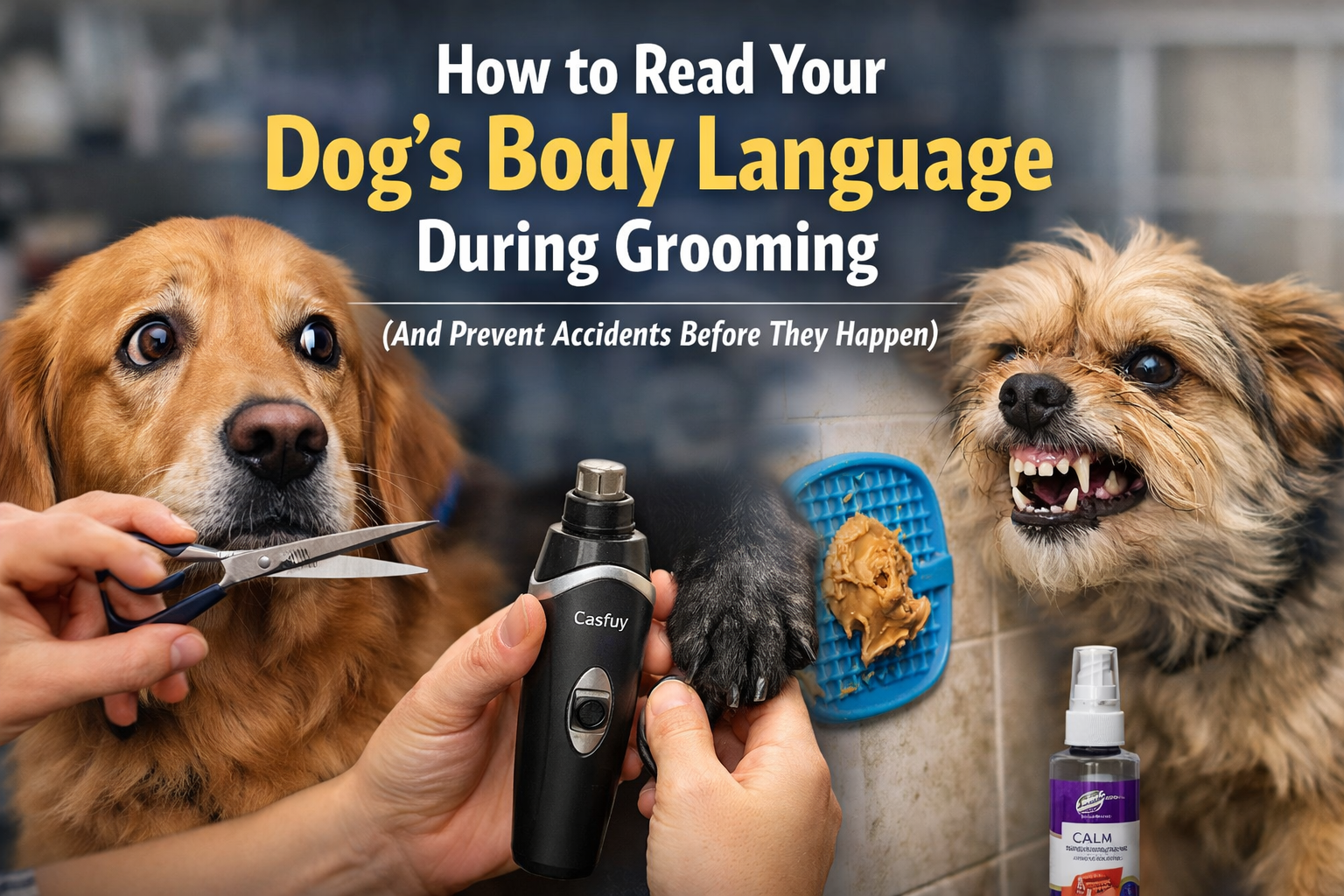
Grooming accidents rarely come out of nowhere.
Dogs almost always give warning signs first—but most pet owners don’t recognize them until it’s too late.
If you learn how to read your dog’s body language during grooming, you can prevent bites, injuries, and long-term fear before they ever happen.
Let’s break this down in a practical, real-life way.
Why Reading Your Dog Matters More Than Any Tool
You can have the best clippers, brushes, and products in the world…
But if your dog is stressed, overwhelmed, or scared, grooming can turn dangerous fast.
Even “good dogs” bite when pushed past their limit.
Your job isn’t just to groom—it’s to observe, adjust, and respond in real time.
Subtle Stress Signals Most Owners Miss
These are early warning signs. This is your chance to adjust before things escalate.
- Lip licking (when no food is present)
- Yawning
- Turning head away
- Whale eye (showing the whites of the eyes)
- Sudden stillness (this one is BIG)
- Ears pinned back
- Tail tucked or stiff
👉 Important: Stillness does NOT mean calm.
It often means your dog is freezing—and that’s right before escalation.
Green Light vs Yellow Light vs Red Light Behavior
This framework will change how you groom forever.
✅ Green Light (Safe to Continue)
- Loose body
- Soft eyes
- Willing to stay
- Normal breathing
⚠️ Yellow Light (Proceed Carefully)
- Tension in body
- Pulling away slightly
- Repeated stress signals
- Avoidance
👉 What to do: Slow down. Switch approach. Give a break.
❌ Red Light (Stop Immediately)
- Growling
- Snapping
- Hard stare
- Freezing + stiffness
👉 What to do: Stop grooming. Reset. Do NOT push through.
High-Risk Grooming Moments
These are the times most bites happen:
- Nail trims
- Face/scissor work
- Matted coat removal
- Using a high-velocity dryer
👉 These require extra awareness and patience.
How to Keep Your Dog Calm and Comfortable During Grooming
This is where most DIY groomers go wrong—they focus on getting it done instead of keeping the dog regulated.
Let’s fix that.
1. Use Distraction That Actually Works (Lick Mats)
Licking releases calming endorphins in dogs. This is one of the easiest ways to reduce stress.
Pro tip:
Spread peanut butter, plain yogurt, or wet food and stick it to the wall during grooming.
Lick Mat for Dogs & Cats 2 Pack
2. Use Calming Sprays for Stressful Moments
These sprays mimic natural calming pheromones and can help take the edge off nervous dogs.
Best used:
- Before nail trims
- Before introducing tools
- During high-stress grooming steps
Bodhi Dog Natural Calming Spray for Dogs – Anxiety Relief
3. Choose Safer Tools (Especially for Nails)
Grinders are often safer than clippers because they:
- Reduce risk of cutting the quick
- Allow gradual trimming
- Are less “sharp” and intimidating
Quieter tools = less fear.
Whisper Quiet Dog Nail Grinder with LED Light
4. Create a Calm Grooming Environment
- Turn off loud distractions
- Use a non-slip surface
- Keep sessions short
- Stay emotionally neutral (dogs feel your stress)
👉 If you’re rushed or frustrated, your dog will be too.
How to Respond to Stress (This Is What Sets You Apart)
Recognizing stress is step one. Responding correctly is what prevents injury.
If your dog shows mild stress:
- Pause for 30–60 seconds
- Let them reset
- Resume slowly
If stress increases:
- Change the task (ex: stop nails, switch to brushing)
- Use a lick mat or break
If your dog hits red-light behavior:
- Stop completely
- Try again later or another day
👉 There is no prize for “finishing the groom.”
Common Mistakes That Lead to Bites
Let’s be honest—most grooming accidents are preventable.
Avoid these:
- Rushing the process
- Holding your dog too tightly
- Ignoring early warning signs
- Forcing completion of the groom
- Using loud or intimidating tools too quickly
The Bottom Line
Safe grooming isn’t about being fast or perfect.
It’s about being aware, patient, and responsive.
When you learn to read your dog:
- You prevent injuries
- You build trust
- You make grooming easier over time
And that’s what truly good grooming looks like.
Affiliate Disclosure
This post may contain affiliate links. If you purchase through these links, I may earn a small commission at no extra cost to you. I only recommend products I trust and would use in my own grooming routine.




Leave a Reply