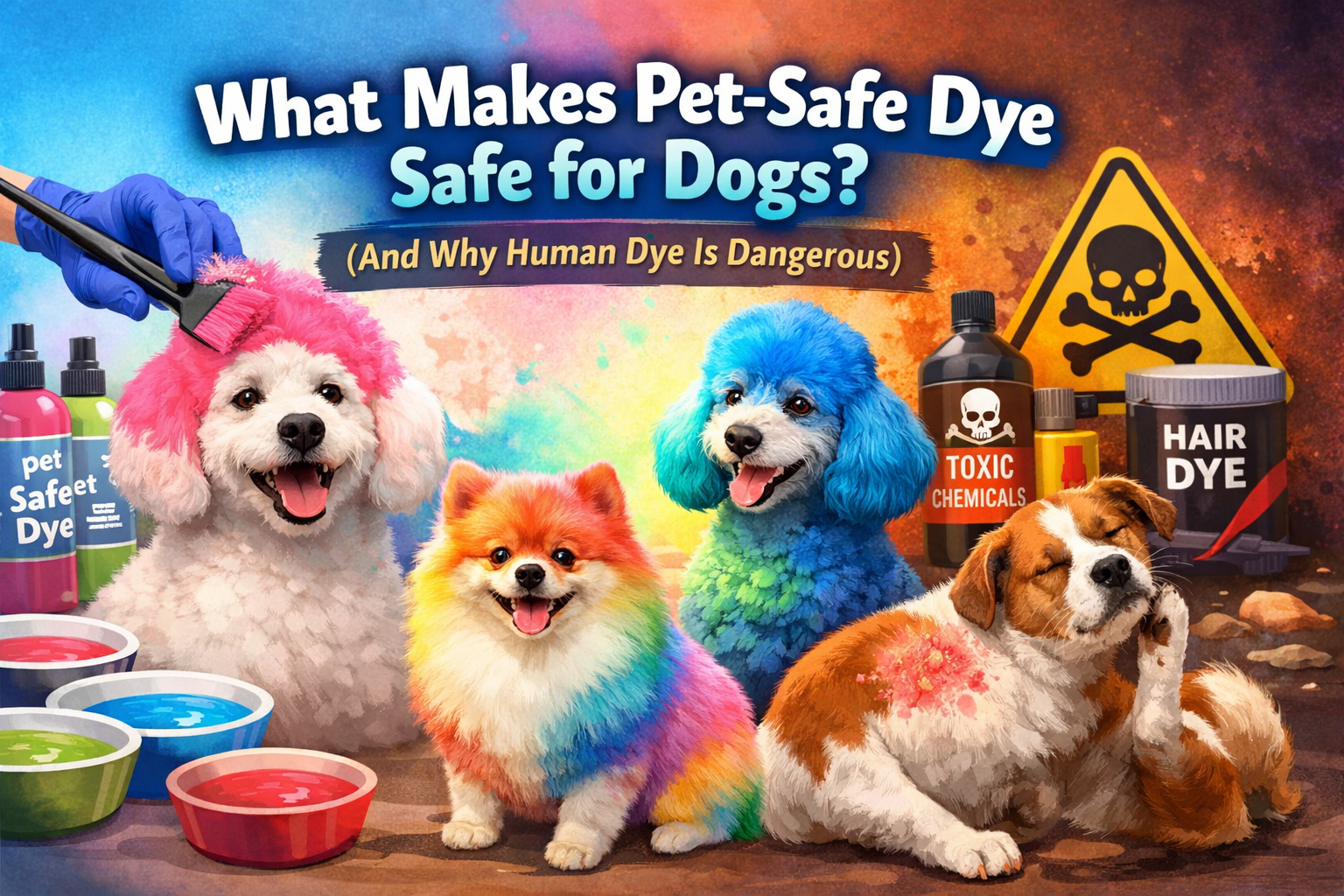
Coloring your dog’s coat can be fun, creative, and a way to express personality—but only when it’s done safely.
There’s a big difference between dyes made specifically for dogs and the products designed for human hair. And that difference isn’t just marketing—it’s about your dog’s health, skin safety, and overall well-being.
If you’ve ever wondered what actually makes pet-safe dye safe, here’s what you need to know.
What Is Pet-Safe Dog Dye?
Pet-safe dye is specially formulated for dogs using non-toxic, gentle ingredients that won’t harm their skin or body—even if they lick their coat.
Unlike human hair dye, these products are designed with a dog’s biology in mind:
- Their different skin pH
- Their grooming habits (licking!)
- Their more sensitive skin barrier
👉 If you’re new to coloring dogs or question whether dying a dog’s fur is even ethical, read this post first: Is It Ethical to Dye My Dog?
What Makes Pet-Safe Dye Actually Safe?
1. Non-Toxic Ingredients
This is the biggest one.
Pet-safe dyes are typically:
- Food-grade or cosmetic-grade
- Free from ammonia and peroxide
- Made with gentle, semi-permanent pigments
Why does that matter?
Because dogs will lick themselves. Always.
If the dye isn’t safe to ingest in small amounts, it shouldn’t be on their coat—period.
2. pH-Balanced for Dog Skin
Dogs don’t have the same skin as we do.
Human skin is more acidic, while dogs have a more neutral pH. Using the wrong product can:
- Disrupt their skin barrier
- Cause dryness or irritation
- Lead to itching or even chemical burns
Pet-safe dyes are formulated specifically to avoid that.
3. No Harsh Chemical Penetration
Safe dog dyes:
- Coat the hair shaft
- Fade gradually over time
They do NOT:
- Penetrate deeply into the hair
- Require chemical developers
That means less damage and a much healthier coat overall.
4. No Toxic Fumes or Chemical Reactions
Pet-safe dyes are designed to be:
- Low odor or fragrance-free
- Non-reactive on the skin
Compare that to human dye, which can:
- Release strong fumes
- Heat up during processing
- Irritate both the dog and the groomer
5. Tested for Animal Use
Reputable pet dyes are:
- Tested with animal safety in mind
- Used by professional groomers
- Designed for real-world grooming conditions
That’s a completely different standard than human beauty products.
Why Human Hair Dye Is NOT Safe for Dogs
Let’s be clear here—this is where people get into trouble.
Human hair dye often contains:
- Ammonia
- Peroxide
- Chemical developers
- Strong artificial fragrances
These can cause:
- Skin irritation or burns
- Allergic reactions
- Toxic ingestion when licked
- Long-term coat damage
Even a “small amount” is not worth the risk.
When You Should NOT Dye a Dog
Even with safe products, dye isn’t always appropriate.
Avoid dyeing if your dog:
- Has matted fur
- Has irritated or broken skin
- Is very young, elderly, or sensitive
- Is already dealing with coat damage
Here’s the honest truth:
👉 Color should never come before coat health.
If the foundation isn’t healthy, adding dye is just covering up a problem—and potentially making it worse.
A Simple Rule to Follow
If you wouldn’t feel comfortable with your dog licking it…
➡️ Don’t put it on their coat.
Final Thoughts
Pet-safe dye isn’t just a “gentler version” of human dye—it’s a completely different product designed with your dog’s safety in mind.
When used correctly, it can be a fun and harmless way to get creative. But when the wrong products are used, the risks are very real.
If you’re going to dye a dog, do it the right way:
- Use only pet-safe products
- Prioritize coat and skin health
- And always take a safety-first approach



Leave a Reply