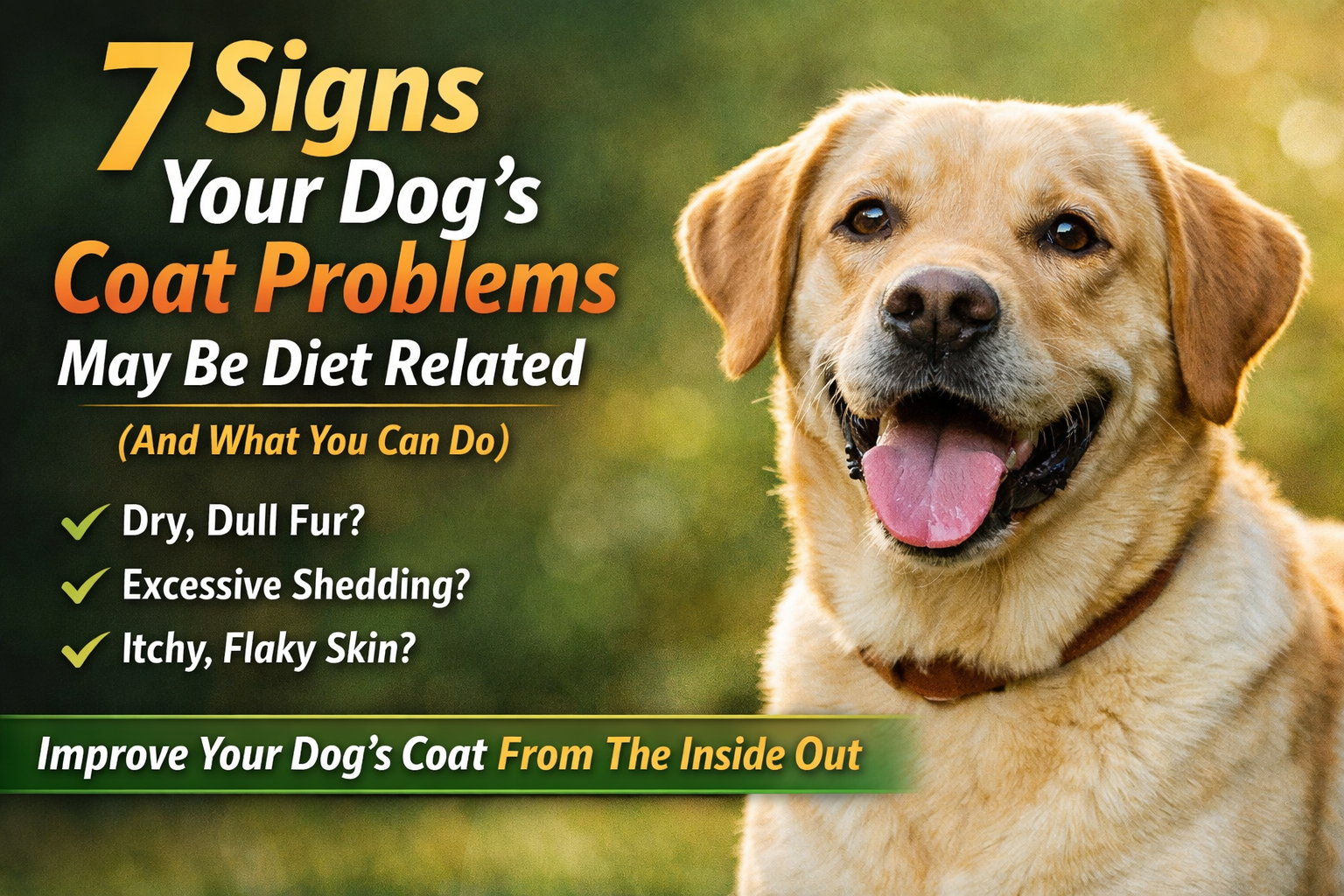
As dog owners, we all want that soft, shiny, healthy coat. It’s one of the biggest signs that our dogs are thriving. But sometimes coat problems start showing up — dryness, shedding, dullness — and we assume it’s a grooming issue or seasonal change.
After doing my own research while trying to improve my own dog’s coat, I learned that nutrition plays a huge role in coat health. In many cases, what’s happening on the outside is actually a reflection of what’s happening on the inside.
Here are some common signs your dog’s coat problems may be diet related — and what you can start looking into.
1. Dull, Lifeless Fur
A healthy coat should have a natural shine. If your dog’s coat suddenly looks flat, faded, or rough even after brushing and bathing, poor nutrition could be the cause.
Low-quality diets that lack essential fatty acids, vitamins, and quality protein often lead to coats that lose their glow.
What may help:
- Foods rich in omega-3 and omega-6 fatty acids
- Higher quality protein sources
- Fish-based or balanced whole-food diets
2. Excessive Shedding
All dogs shed to some degree — but sudden or extreme shedding can be a red flag.
If your dog is blowing coat constantly, leaving hair everywhere year-round, it may be linked to nutritional imbalance rather than normal seasonal shedding.
Possible diet causes:
- Low fat intake
- Poor protein digestibility
- Lack of key nutrients like zinc or biotin
3. Dry, Flaky Skin (Dandruff)
White flakes in the coat aren’t always just a grooming issue. Chronic dry skin is often connected to diet quality.
Dogs need healthy fats to maintain skin moisture. Without them, skin becomes irritated and flaky — which then affects coat growth and texture.
Look into:
- Adding omega supplements
- Switching to a more nutrient-dense food
- Avoiding overly processed or filler-heavy diets
4. Greasy or Oily Coat
On the opposite end, some dogs develop an overly oily coat that smells unpleasant.
This can sometimes happen when the diet is too high in poor-quality fats or when the body is struggling to process certain ingredients.
Possible triggers:
- Cheap fat sources
- Food sensitivities
- Imbalanced homemade diets
5. Slow Hair Growth After Grooming
If your dog’s hair takes forever to grow back after a haircut or shave, nutrition may be playing a role.
Hair growth requires protein, amino acids, and vitamins. When the body is lacking these, coat regrowth slows significantly.
6. Color Fading or Coat Texture Changes
Black coats turning rusty, reds becoming dull, or curls losing structure can sometimes be nutrition related.
Mineral deficiencies and protein quality both impact pigment and coat structure.
This is something many poodle owners notice first.
7. Chronic Itching Without Clear Cause
While allergies and parasites are common causes of itching, diet sensitivities can also lead to skin inflammation and coat damage.
If your dog is constantly scratching, chewing, or licking and grooming changes aren’t helping, it may be time to evaluate the food.
Related Reading: Best Foods for a Healthy Dog Coat
If you’re starting to suspect your dog’s coat issues may be linked to diet, the next step is learning what to feed instead.
I put together a detailed guide based on my own research and personal experience improving my dogs’ coats.
👉 Read next: Best Foods for a Healthy Dog Coat (What I Personally Started Adding)
In that post I cover:
- Protein sources that support coat growth
- Healthy fats that improve shine
- Whole foods that nourish skin from the inside out
- Simple diet upgrades you can start right away
This is a great next step if you’re trying to create a full coat-health routine, not just rely on grooming products.
What I Personally Learned
When I started paying attention to coat health from a nutrition perspective, I realized grooming products alone couldn’t fix everything.
Better food, targeted supplements, and patience made a noticeable difference over time. Coat health improvements often take 6–12 weeks because hair growth is slow.
If coat problems are severe or sudden, it’s always smart to rule out medical issues with a vet first.
Your dog’s coat is like a health report card.
If brushing, bathing, and grooming routines are solid but the coat still struggles, nutrition is absolutely worth looking into.
Sometimes the biggest glow-up doesn’t come from a new shampoo — it starts in the food bowl.

Leave a Reply