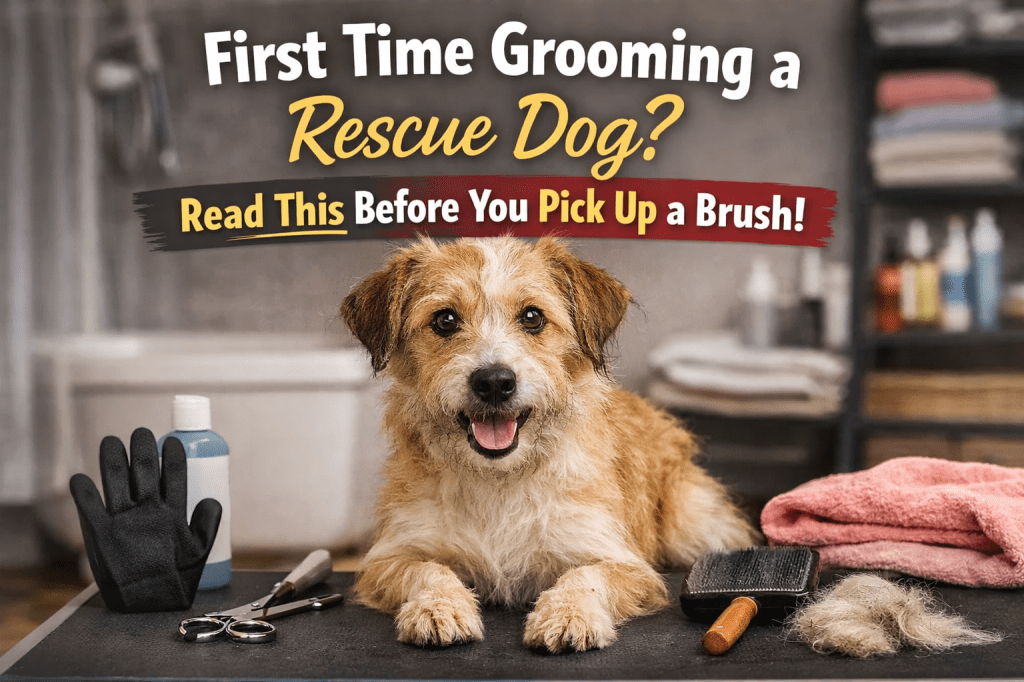
Bringing home a rescue dog is emotional, exciting… and sometimes unexpectedly challenging.
One of the biggest struggles new adopters face is grooming.
Many rescue dogs have:
- Never been brushed
- Experienced rough handling
- Painful matting
- Fear of water or dryers
- Sensory overwhelm
As a groomer, I can tell you this:
How you handle grooming in the first few weeks can shape your dog’s trust for years.
Before you even think about baths and haircuts, preparation matters.
If you haven’t already, I recommend reading my full guide on what to have ready when adopting:
👉 Bringing Home a Rescue Dog? Here’s Everything I Recommend Having Ready
That post covers the emotional and environmental setup that makes grooming much easier.
Now let’s talk specifically about grooming preparation.
Start With Trust — Not Tools
New adopters often want to “fix everything” immediately.
But rescue dogs don’t need a full spa day on day one.
They need:
- Slow introductions
- Gentle touch
- Positive association
- Predictable routines
Sit with your dog.
Let them smell the brush.
Reward curiosity.
This alone can prevent grooming battles later.
Choose Gentle Beginner Tools
Using the wrong tools too soon can create lifelong fear.
A soft slicker like the AKC Slicker Brush is ideal for most coat types because it removes loose hair without harsh pulling.
For tangles, a detangling spray such as TropiClean Tangle Remover can reduce discomfort.
Always brush in short, calm sessions — not marathon grooming attempts.
Prepare a Calm Grooming Environment
Think about the dog’s nervous system.
Loud dryers, slippery floors, rushing hands — these can trigger panic.
Helpful preparation includes:
- Non-slip bath mats
- Towels ready beforehand
- Treats within reach
- A quiet room with minimal distractions
A slow-feed enrichment toy like the KONG Classic Dog Toy can also help keep anxious dogs occupied during grooming breaks.
Know When a Bath Is — and Isn’t — the Right First Step
If a dog is severely matted, bathing before brushing can make the problem worse.
Water tightens mats and increases pain.
In these cases, a professional groomer may need to safely remove the coat first.
For light dirt or odor, a soothing product like Warren London Oatmeal Dog Shampoo is a gentle option for sensitive rescue skin.
Always rinse thoroughly. Residue can cause itching and stress.
Nail Care Should Be Introduced Gradually
Many rescue dogs fear having their feet handled.
Start by:
- Touching paws briefly
- Rewarding calm behavior
- Introducing nail clippers slowly
When ready, tools like the Epica Professional Nail Clippers allow controlled trimming.
If the dog shows panic or aggression, seek professional help. Safety matters.
Watch for Grooming Stress Signals
Rescue dogs often communicate discomfort subtly.
Look for:
- Lip licking
- Yawning
- Turning head away
- Stiff posture
- Sudden hyperactivity
- Attempting to hide
These are signs to pause, not push forward.
Trust grows when dogs feel heard.
When to Call a Professional Groomer
Sometimes the kindest choice is not doing it yourself.
Professional groomers can:
- Safely remove severe matting
- Identify skin problems
- Create a manageable coat plan
- Help desensitize fearful dogs
Tell your groomer the dog is a rescue.
This helps them adjust their approach.
Final Thoughts
Grooming a rescue dog isn’t just about appearance.
It’s about:
- Building safety
- Creating positive touch experiences
- Supporting physical comfort
- Strengthening your relationship
Go slowly.
Celebrate small wins.
Your patience now can shape a lifetime of trust.





 Shear Grace
Leave a comment