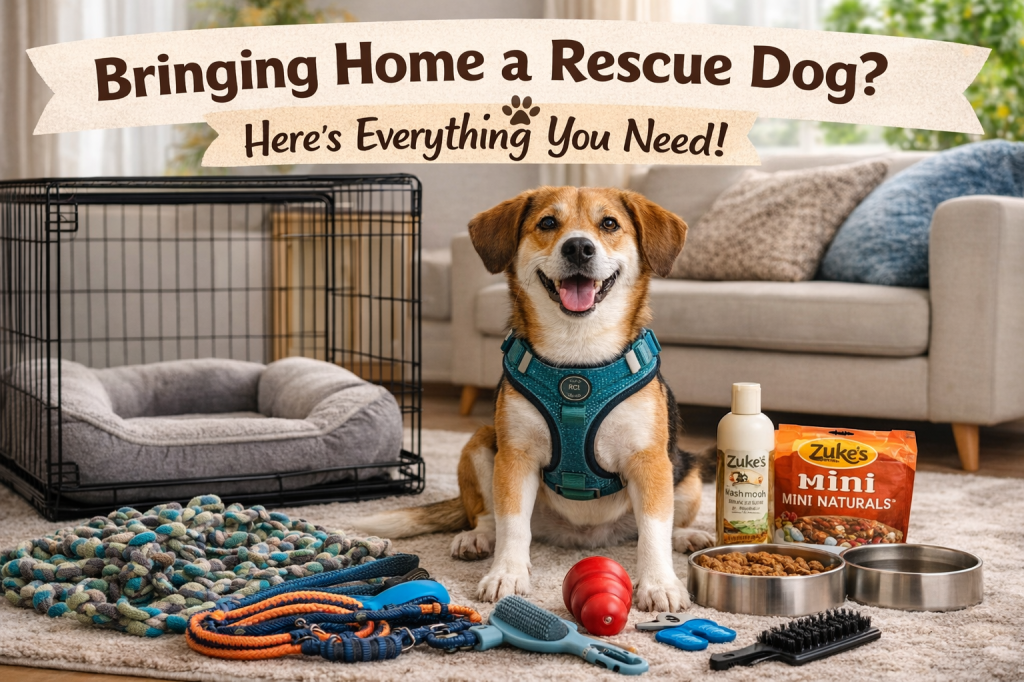
Bringing home a rescue dog is one of the most emotional and meaningful experiences you can have as a dog owner.
But it can also be overwhelming — for both you and the dog.
Over the years working with dogs, I’ve seen rescue transitions go beautifully… and I’ve also seen them become stressful simply because families weren’t fully prepared for what those first few weeks might look like.
Rescue dogs often arrive with unknown histories, fear responses, grooming issues, or difficulty settling into a new routine.
Having the right supplies ready ahead of time can make a huge difference in helping them feel safe.
If you’re still deciding whether adoption or a breeder puppy is the right fit for your home, I shared an honest look at that here:
👉 Adopt Don’t Shop? The Truth About Reputable Dog Breeders No One Talks About
Now let’s talk about what rescue dogs actually need.
A Quiet Safe Space (This Matters More Than Most People Realize)
Many rescue dogs walk into a new home completely overwhelmed.
New smells.
New voices.
New expectations.
I always recommend setting up a decompression area before the dog arrives.
A simple wire crate like the MidWest Homes for Pets Dog Crate can give a dog a place to retreat and observe safely.
Add a soft washable bed such as the Bedsure Calming Dog Bed to help reduce anxiety and encourage rest.
This space should be low-traffic and predictable.
Think of it as their “reset zone.”
Escape-Proof Walking and Containment Tools
This is one of the biggest differences between rescue dogs and well-planned breeder puppies.
Rescue dogs are statistically more likely to:
- Panic and bolt
- Slip collars
- Try to escape yards
- Become reactive on leash
I strongly suggest:
- A martingale collar like the PetSafe Martingale Collar
- A secure harness such as the Ruffwear Front Range Harness
- A sturdy leash like the Taglory Rope Dog Leash
- Baby gates to manage doorways and transitions
The first few weeks are about safety first — confidence later.
Enrichment Tools to Reduce Stress Behaviors
Many rescue dogs don’t know how to relax.
They may pace, whine, chew, or seem unable to settle.
Food-based enrichment can work wonders.
I’ve seen anxious dogs become noticeably calmer when given structured outlets like:
- The KONG Classic Dog Toy stuffed with food
- A Snuffle Mat for Dogs to encourage natural foraging
- A silicone Lick Mat to promote soothing repetitive behavior
These tools give nervous dogs something productive to focus on.
Grooming Supplies for the “Unknown Coat Situation”
This is something new adopters often don’t expect.
Many rescue dogs arrive:
- Severely matted
- Shedding heavily
- With dry skin
- Or completely unfamiliar with brushing
Starting gently at home can build trust before a professional grooming visit.
I usually recommend:
- A beginner-friendly brush like the AKC Slicker Brush
- Nail clippers such as the Epica Professional Nail Clipper
- A mild shampoo like Warren London Oatmeal Dog Shampoo
Even short positive grooming sessions can help a dog learn that handling is safe.
A Simple Training Foundation
Rescue dogs don’t need complicated training plans right away.
They need:
- Predictable routines
- Clear expectations
- Calm leadership
- High-value rewards
Soft training treats like Zuke’s Mini Naturals are great for building early engagement and trust.
Focus on connection before perfection.
A Veterinary Plan Right Away
Even if the rescue organization has provided care, I always recommend scheduling a vet visit within the first week.
This allows you to:
- Establish a baseline
- Address parasites or skin issues
- Discuss nutrition
- Plan long-term preventive care
Early intervention can prevent bigger issues later.
Realistic Expectations (The Most Important Preparation)
This is the part no one can buy on Amazon.
Rescue dogs may not show their true personality immediately.
Some shut down.
Some cling intensely.
Some test boundaries once they feel safe.
Progress is rarely linear.
But when families stay patient and consistent, rescue dogs often become incredibly loyal, intuitive companions.
Final Thoughts
Rescue dogs don’t need perfection.
They need preparation.
They need safety.
They need time.
Having the right tools ready isn’t about spoiling a dog.
It’s about helping them succeed in a brand new world.
And when that transition goes well, the bond that forms can be truly extraordinary.




 Shear Grace
Leave a comment