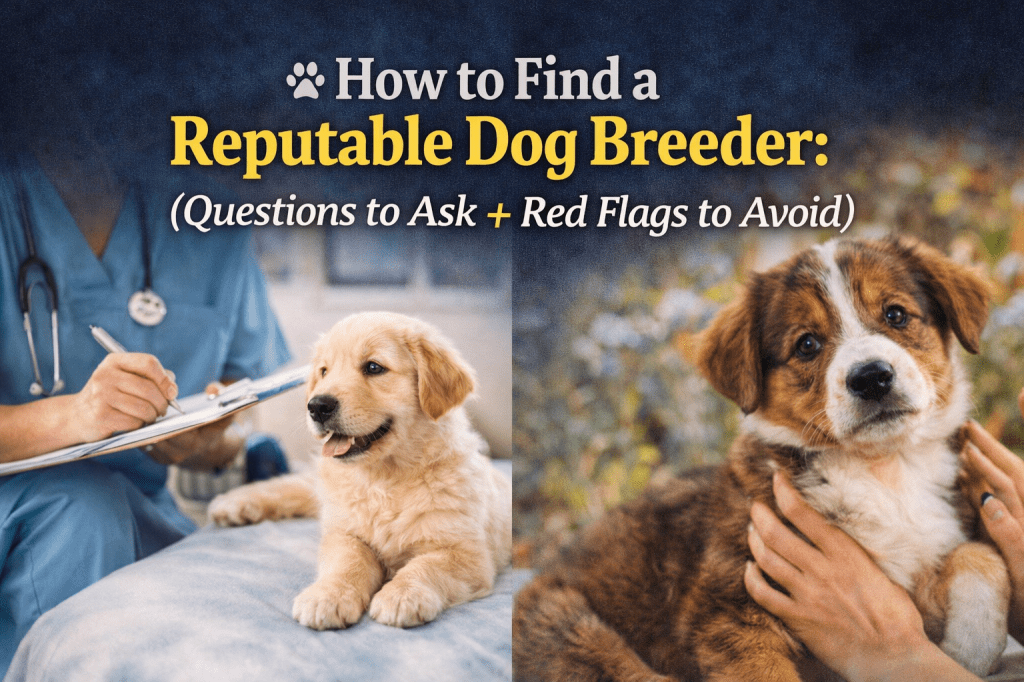
Choosing where your dog comes from is one of the most important decisions you will ever make as a dog owner.
Not all breeders are the same.
Some are deeply committed to improving their breed. Others are simply producing puppies.
Knowing the difference can protect your future dog — and your family — from years of avoidable struggle.
First — If You Haven’t Read This Yet
Before learning how to identify a reputable breeder, it helps to understand why ethical breeders have an important place in the dog world.
In Part 1 of this series, we talked honestly about the emotional debate surrounding adoption and buying from breeders — and why both paths can be ethical depending on the situation.
You can read that post here:
“Adopt Don’t Shop? The Truth About Reputable Dog Breeders No One Talks About”
Understanding this bigger picture will help you make a more confident and informed decision.
What a Reputable Breeder Actually Does
A responsible breeder is not just selling puppies.
They are:
- Protecting breed health
- Preserving stable temperament
- Carefully planning each litter
- Providing lifelong support to owners
- Taking responsibility for every dog they produce
Their goal is not quantity.
It is quality and long-term success.
Sign #1: Real Health Testing — Not Just a Vet Visit
This is one of the biggest misunderstandings new dog owners have.
A simple veterinary check does not equal genetic health testing.
Reputable breeders perform breed-specific screenings such as:
- Hip and elbow certifications
- Eye examinations
- Cardiac evaluations
- DNA testing panels
They will gladly:
- Show documentation
- Explain results
- Discuss risks openly
Transparency is a major green flag.
Sign #2: They Care Deeply About Temperament
Good breeders are producing dogs that can live successfully in real homes.
They select breeding dogs based on:
- Confidence
- Trainability
- Appropriate energy level
- Sound nerves
- Breed-appropriate instincts
This is especially important for families with children, therapy dog prospects, or first-time dog owners.
Sign #3: Puppies Are Raised With Purpose
Early environment shapes a dog’s future.
Look for breeders who:
- Raise puppies in enriched, clean spaces
- Introduce normal household sounds
- Begin gentle handling and socialization
- Provide structured exposure to new experiences
These early efforts can dramatically reduce fear and behavioral problems later in life.
Sign #4: They Interview YOU
Many people are surprised when breeders ask detailed questions.
But this is a good sign.
Responsible breeders want to know:
- Your lifestyle
- Work schedule
- Training plans
- Grooming commitment
- Dog experience
- Household dynamics
They are trying to ensure a lifelong match — not just complete a sale.
Sign #5: They Offer Lifetime Support
Ethical breeders do not disappear after pickup day.
They typically:
- Provide contracts
- Require dogs to be returned if owners cannot keep them
- Offer training and grooming guidance
- Stay emotionally invested in their puppies
This commitment helps prevent dogs from entering shelters later.
Questions You Should Always Ask a Breeder
When speaking with a breeder, consider asking:
- What health testing has been done on the parents?
- Why was this breeding planned?
- What temperament traits are you prioritizing?
- How are puppies socialized before going home?
- What challenges should I realistically expect with this breed?
- What happens if I cannot keep the dog?
- How often do you produce litters?
A reputable breeder will welcome thoughtful questions.
Warning Signs of a Backyard Breeder
Backyard breeders are not always intentionally harmful — but the outcomes can still be serious.
Be cautious if you notice:
- No proof of health testing
- Multiple breeds available at once
- Frequent or constant litters
- Willingness to sell immediately without screening
- Meeting in parking lots or refusing to show living conditions
- Heavy marketing of “rare colors” or extreme sizes
- Pressure to send deposits quickly
These situations can lead to long-term health and behavioral problems.
Why This Decision Matters More Than You Think
Where your dog comes from can influence:
- Veterinary costs
- Training difficulty
- Emotional stress
- Grooming needs
- Safety around children
- Long-term quality of life
Taking time to research breeders is not being picky.
It is being responsible.
Final Thoughts
A well-bred dog is not about status or appearance.
It is about predictability, preparation, and partnership.
The goal is not just to bring home a puppy.
The goal is to welcome a dog who can thrive in your home for the next 10–15 years.




 Shear Grace
Leave a comment