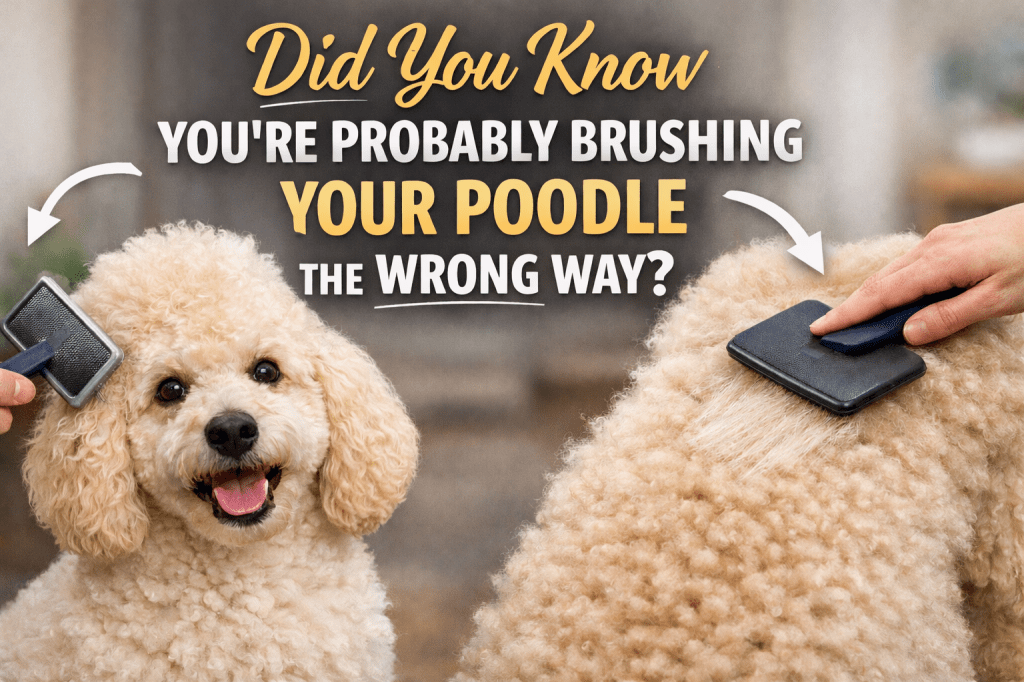
If you own a poodle or any dog with a curly or dense coat, brushing technique matters more than most people realize. One of the most important — and commonly misunderstood — grooming methods is brushing the coat backwards (against the direction it naturally lays).
Many owners instinctively brush the fur down and flat because it looks neat and smooth. The problem? That method often hides tangles instead of removing them.
Let’s break down exactly why brushing backwards is essential, how to do it properly, and what happens when you skip this step.
Understanding the Nature of a Curly Coat
Poodles, doodles, Portuguese Water Dogs, Bichons, and similar breeds have coats that are:
- Dense
- Curly or wavy
- Non-shedding (hair gets trapped in the coat)
- Highly prone to matting
- Able to hide tangles deep near the skin
Unlike straight-coated breeds, the top layer of a curly coat can look perfectly brushed while tight knots are forming underneath.
This is why professional groomers focus on lifting and opening the coat, not just smoothing it.
What Happens When You Only Brush With the Direction of the Fur
When you brush in the natural lay of the coat:
1. You Smooth Over Tangles Instead of Removing Them
The brush glides over the surface.
The coat looks fluffy and neat.
But underneath, small tangles remain.
These small tangles:
- Tighten over time
- Turn into painful mats
- Pull on the dog’s skin
- Eventually require shaving
Many owners say:
“But I brush every day!”
Yes — but technique matters more than frequency.
2. Mats Form Closest to the Skin
Curly coats mat from the inside out.
Common hidden mat areas:
- Behind ears
- Armpits
- Groin
- Collar line
- Tail base
- Under harnesses
- Back of legs
Brushing downward often never reaches these problem layers.
3. It Gives a False Sense of Maintenance
The dog looks brushed.
The owner feels confident.
The groomer finds severe matting.
This is one of the biggest sources of frustration between groomers and owners.
It’s not neglect.
It’s usually lack of proper brushing education.
Why Brushing Backwards Works
Brushing against the coat:
✓ Lifts the Hair Away From the Skin
This allows you to see and reach the base of the coat.
You are no longer guessing.
You are working layer by layer.
✓ Separates and Opens the Curl Pattern
Curly hair naturally wraps around itself.
Brushing backwards:
- Breaks apart developing tangles
- Prevents knots from tightening
- Creates airflow in the coat
- Keeps skin healthier
✓ Creates Proper Fluff for Line Brushing
Professional grooming is based on line brushing, which means:
- Lift coat up
- Brush small horizontal sections
- Work from skin outward
Brushing backwards makes this process easier because:
- The coat is already lifted
- You can clearly see what you are doing
- You avoid missing hidden mats
✓ Helps You Identify Problems Early
When you brush backwards, you can quickly notice:
- Tight areas
- Beginning mats
- Skin irritation
- Moisture spots
- Flea dirt or debris
Early detection prevents:
- Painful dematting
- Skin infections
- Full shave-downs
The Proper Technique (Step-by-Step)
- Start with a light mist of grooming spray or water
(Dry brushing can cause breakage) - Use a slicker brush
- Lift a section of coat
- Brush against the direction the hair grows
- Then brush outward and downward to smooth
- Follow with a metal comb check
- The comb should glide to the skin easily
- If it snags → there is still a tangle
This final comb check is the gold standard in grooming.
A Helpful Mindset Shift for Owners
Instead of thinking:
“I need to make my dog look brushed.”
Think:
“I need to make sure the coat is separated all the way to the skin.”
Appearance is not the goal.
Coat health and comfort are the goal.
What Happens If You Skip Back Brushing Long Term
- Chronic matting
- Skin bruising from tight knots
- Groomers forced to shave short
- Increased grooming costs
- Negative grooming experiences
- Dogs becoming fearful of brushing
In severe cases, mats can:
- Cut off circulation
- Trap moisture leading to infection
- Hide wounds or parasites
This is why groomers feel strongly about proper technique.
It is not about aesthetics — it is about animal welfare.
Final Thoughts
Brushing a curly coat backwards may feel unnatural at first.
It may make the coat look messy before it looks neat.
But this step is what:
- Prevents painful matting
- Keeps grooming appointments stress-free
- Allows for longer, fluffier haircuts
- Protects the dog’s skin
- Builds trust during grooming
If you own a poodle or doodle, mastering this single technique can completely change your grooming success.
If you want to learn more about caring for your curly-coated friend, check out my ebook Poodle & Doodle Survival Guide




 Shear Grace
Leave a comment